How to Start Composting at Home – A Beginner’s Guide to Easy, Low-Waste Habits

Composting sounds complicated until you actually try it. Strip it back and you're really just collecting kitchen scraps and garden trimmings, then letting nature do the rest. Food waste rotting in landfill produces methane, a greenhouse gas far more potent than CO₂ – keeping scraps out of the bin matters. You also end up with rich, crumbly compost your plants genuinely love. This guide covers what compost actually is, how to pick the right setup for your space, what to add, and how to keep things ticking along without much effort.

What Composting Is and Why It Matters

What Composting Is

Rotting fruit peel and grass clippings might not sound exciting, but they are the raw ingredients for one of the most useful things you can make at home. Composting is simply the natural breakdown of organic matter – food scraps, garden waste, cardboard – into a dark, crumbly material that looks and smells like rich soil. That finished product is what gardeners call compost, and it is genuinely good stuff.

Around 30% of household rubbish is food or garden waste that could be composted instead of sent to landfill. In landfill, that organic material breaks down without oxygen, releasing methane – a greenhouse gas roughly 80 times more potent than CO₂ over a 20-year period. Composting at home keeps that material out of the bin entirely.

What Finished Compost Looks Like

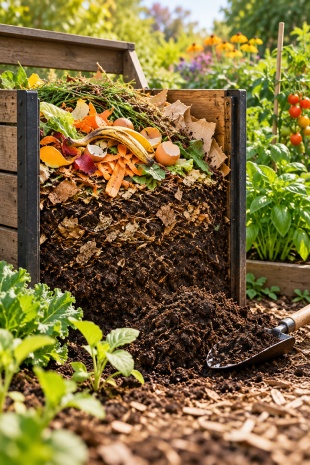
Ready compost is dark brown, crumbly, and earthy-smelling. It bears no resemblance to the banana peel you started with.

Why Aerobic Composting Works Best

Aerobic means "with oxygen." When your pile gets enough air, microbes break material down efficiently and without bad odours.

The Everyday Benefits

Finished compost feeds soil, reduces the need for shop-bought fertiliser, and cuts your general waste noticeably – all from scraps you were already throwing away.

Choose the Right Home Composting Setup

There's no single correct way to compost. The best system is simply the one you'll actually use, and that depends on your space, your budget, and how hands-on you want to be.

Outdoor Pile

A bare heap in a corner of your garden is the simplest option. No cost, no equipment. You just need a patch of ground at least one metre square. It works well if you have a decent-sized garden and plenty of organic material. Turning it occasionally with a fork speeds things up, but even neglected piles eventually break down.

Compost Bin

Enclosed plastic bins are affordable, tidy, and widely available. Many councils sell them subsidised for around £5–£20. Good for small gardens. They retain heat and moisture better than an open pile, which speeds up decomposition.

Tumbler

A rotating drum on a frame, tumblers make turning easy and keep pests out. They're faster than static bins but cost more, typically £60–£150.

Vermicomposting

Worm bins work indoors or on a balcony, making them ideal for flat dwellers. Worms process kitchen scraps quickly and produce rich compost within weeks.

Setup essentials for any method:

  • A container, bin, or designated pile area
  • A small kitchen caddy for collecting scraps
  • Dry browns like cardboard or straw nearby
  • Water access for moisture management
  • A fork or stick for turning

What to Add, What to Avoid, and How to Build Your Pile

Getting the balance right matters far more than being perfect. A compost pile is forgiving, and you'll learn quickly by doing.

Greens to Add

These are nitrogen-rich materials that feed the microbes doing the work. Fruit and vegetable scraps, tea bags, coffee grounds all count as greens.

Browns to Add

Dry leaves, torn cardboard, newspaper, and paper bags are your carbon-rich browns. They add structure and stop the pile turning into a soggy mess.

What to Avoid

Meat, fish, dairy, cooking oils, pet waste, and diseased plants should stay out. They attract pests or introduce harmful bacteria.

The Greens-to-Browns Balance

Aim for roughly one part greens to two or three parts browns by volume. Keep the pile moist but not soaked, with a texture similar to a sponge that has been squeezed to remove excess water.

How to Start Your Pile

  1. Pick a spot with good drainage, ideally partly shaded.
  2. Lay a base of browns about 10 cm deep.
  3. Add a layer of greens on top.
  4. Repeat, keeping browns as the dominant layer.
  5. Use a garden fork to mix and aerate the pile every one or two weeks.
  6. Check moisture each time – add water if dry, more browns if wet.

How to Keep Compost Healthy and Fix Common Problems

Once your bin is going, expect a slow start. Minor setbacks are normal, and most problems have a simple fix once you know what to look for.

Ongoing Care

Turning the pile every one to two weeks introduces oxygen, which speeds up decomposition. Use a garden fork or a long stick to mix materials from the outside into the centre. If you haven't added anything in a while, toss in some fresh kitchen scraps or dry cardboard to keep things balanced.

Troubleshooting Common Problems

A bad smell usually means too many greens and not enough browns. Add torn cardboard or dry leaves and turn the pile. Slimy, wet compost needs more air and dry material. A pile that isn't breaking down at all is often too dry – water it lightly, then turn it. Pests are drawn to exposed food scraps, so always bury fresh additions under existing material.

Knowing When It's Ready

Finished compost looks dark, crumbly, and smells earthy, a bit like forest soil after rain. Spread a few centimetres over garden beds, mix it into potting soil, or use it to top up containers on a balcony. Even a small amount improves soil structure noticeably.

You Can Start Composting With What You Have

Right now, a container of kitchen scraps is all you need to begin. Composting does not require special equipment, a large garden, or any prior experience. Whether you go with an outdoor bin, a simple pile in the corner of your yard, or a small worm setup under the kitchen sink, the method matters far less than just starting. Balance your greens and browns, keep the pile moist but not soggy, and turn it occasionally to let air in. When something goes wrong – a bad smell, slow breakdown, too many flies – there's a simple fix for it. Small problems are normal, not signs you've failed. Build the habit gradually, starting with one small container of vegetable peelings or coffee grounds, and let it grow from there. Composting does not need to be perfect to be worthwhile. Every scrap you divert from landfill is a genuine win, and that counts from day one.